Classic Buttercream Pisces Cake
Highlighted under: Cakes & Confections
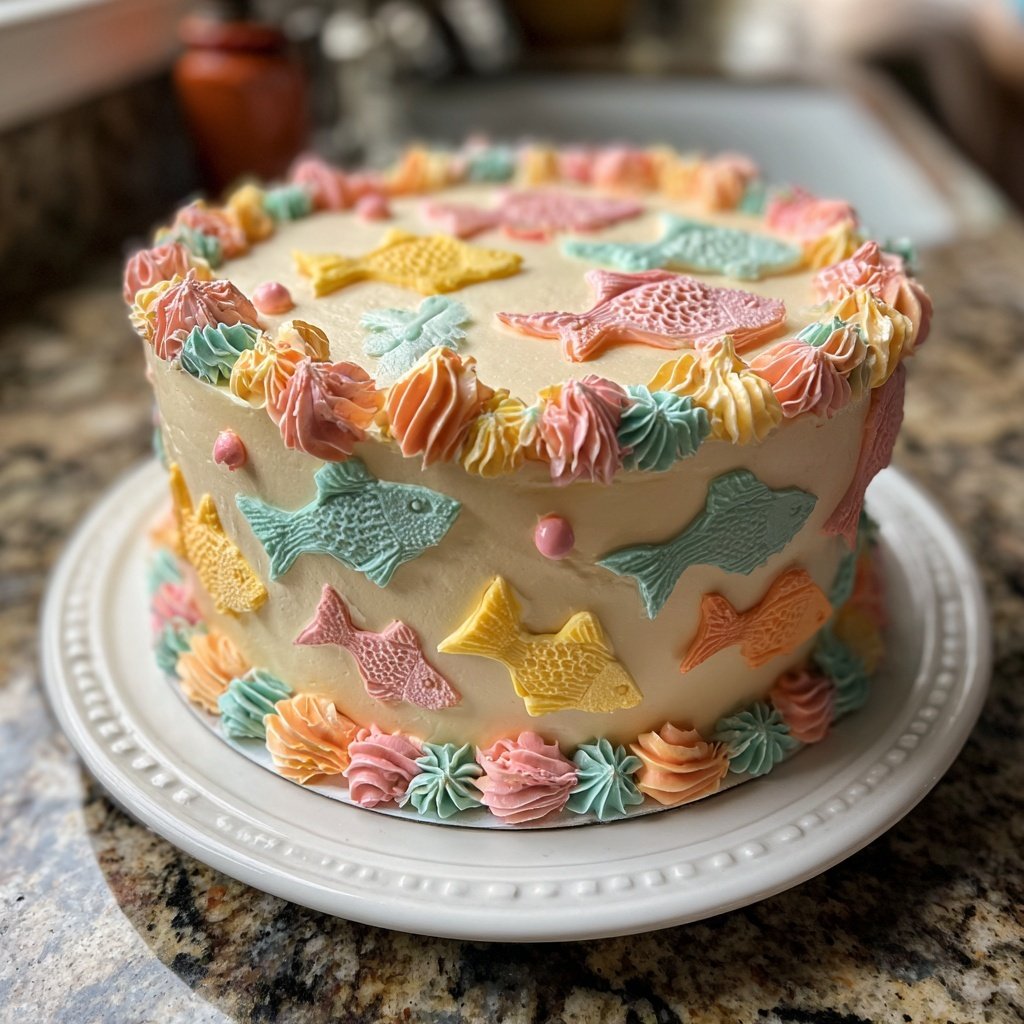
I absolutely adore making cakes, and this Classic Buttercream Pisces Cake is a perennial favorite in my kitchen. The rich, creamy buttercream frosting perfectly complements the light, fluffy cake layers, making it a delightful treat for any occasion. Not only is it visually stunning with its decorative fish details, but it also offers an inviting flavor that guests can't resist. I love the way the sweetness of the buttercream blends seamlessly with the subtle vanilla notes in the cake, creating a harmonious balance that keeps everyone coming back for more.
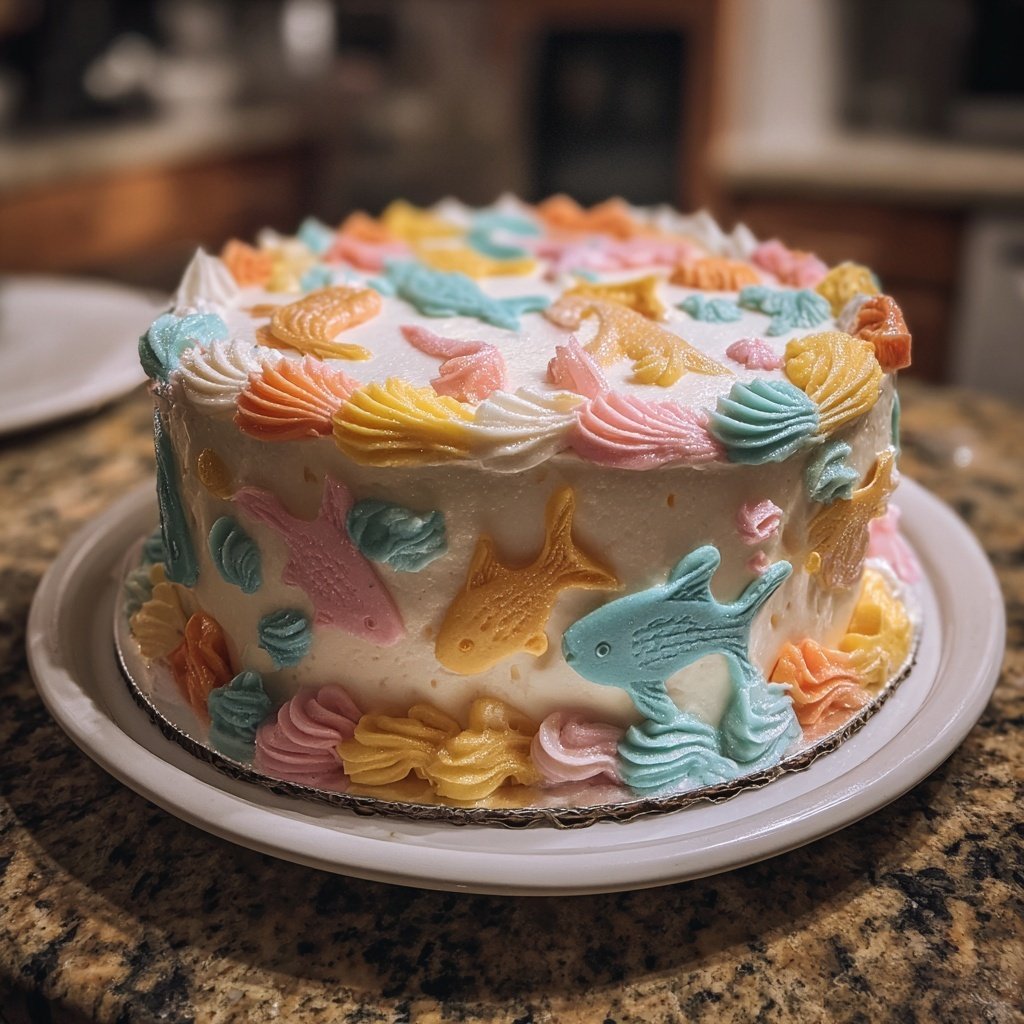
When I first made this Classic Buttercream Pisces Cake, I wanted something that would stand out on the dessert table. I experimented with various designs and landed on the fish motif, which added a whimsical touch. Using a simple piping technique, I was able to create elegant details that gave the cake a unique personality. It was a hit at my daughter's birthday party, and everyone was impressed by its appearance and taste.
One tip I learned while perfecting this recipe is to ensure your butter is at room temperature before making the frosting. This helps achieve that incredibly smooth and creamy texture that coats the cake beautifully. I also recommend chilling the cake layers before frosting them; it makes the process much easier and prevents any slipping while decorating.
Why You'll Love This Cake
- Rich buttery flavor that melts in your mouth
- Playful and elegant design perfect for parties
- Smooth frosting that beautifully complements the cake
Understanding the Ingredients
Each ingredient plays a vital role in the Classic Buttercream Pisces Cake. For example, using high-quality unsalted butter not only enhances the flavor of the buttercream but also affects its texture. Make sure the butter is softened to room temperature, as this will allow for a creamier consistency when blended with the powdered sugar. You can also opt for a dairy-free butter substitute if you're looking for a vegan alternative, but it’s essential to choose one that whips well to maintain that light, fluffy texture in the frosting.
The cake benefits greatly from the milk, which adds moisture and contributes to the overall tenderness of the crumb. Whole milk is the best choice, but if you’re in a pinch, you can use 2% milk with a splash of cream to replicate the richness. Additionally, the eggs serve not only as a binder but also help in leavening the cake. If you're avoiding eggs, consider using a flaxseed meal substitute—mix one tablespoon of flaxseed with three tablespoons of water to replace one egg.
Perfecting Your Frosting Technique
When making buttercream frosting, the mixing method is crucial. I recommend starting with the butter at room temperature to ensure it becomes creamy more quickly. Beat it until it’s fluffy and light, which should take about 2 to 3 minutes. Gradually add the powdered sugar on low speed to prevent a cloud of sugar from escaping into your kitchen. If you find the frosting too thick, add a bit more heavy cream, one tablespoon at a time, until you reach your desired consistency—smooth and spreadable but not runny.
For decorating, it's helpful to use a piping bag fitted with a star tip for elegant designs. Practice on some parchment paper before working on your cake to get comfortable with the pressure and movement. If you want sharper colors or different shades, divide the frosting into smaller bowls and tint them individually with food coloring. Remember to keep the frosting covered while you work to prevent it from crusting over.
Storage and Serving Suggestions
This cake stores exceptionally well, and in fact, the flavors often improve after a day in the fridge! To store, simply cover it gently with plastic wrap or a cake dome to keep it fresh for up to a week. If you need to freeze your cake, wrap the layers in plastic wrap and foil before placing them in an airtight container. They will maintain their flavor for up to three months. Thaw in the refrigerator overnight before frosting and serving.
When it comes to serving, consider pairing the Classic Buttercream Pisces Cake with fresh fruit or a scoop of vanilla ice cream for an added dimension of flavor. You can also add a drizzle of chocolate ganache or a sprinkle of edible glitter to enhance the decorative aspect of the cake. Not only does this make for a stunning presentation, but it also adds a textural contrast that elevates the entire dessert experience.
Ingredients
For the Cake
- 2 cups all-purpose flour
- 1 ½ cups granulated sugar
- ½ cup unsalted butter, softened
- 1 cup milk
- 3 ½ teaspoons baking powder
- 1 teaspoon vanilla extract
- ½ teaspoon salt
- 4 large eggs
For the Buttercream Frosting
- 1 cup unsalted butter, softened
- 4 cups powdered sugar
- 2 tablespoons heavy cream
- 1 teaspoon vanilla extract
- Food coloring (optional)
Instructions
Prepare the Cake
Preheat your oven to 350°F (175°C). Grease and flour two 9-inch round cake pans. In a large bowl, cream the butter and sugar until light and fluffy. Add eggs one at a time, beating well after each addition. Mix in the vanilla extract. In another bowl, sift together the flour, baking powder, and salt. Gradually add the dry ingredients to the wet mixture, alternating with milk. Divide the batter evenly between the prepared pans.
Bake
Bake in the preheated oven for 25 minutes, or until a toothpick inserted in the center comes out clean. Allow the cakes to cool in the pans for 10 minutes before transferring them to a wire rack to cool completely.
Make the Buttercream Frosting
In a large bowl, beat the softened butter until creamy. Gradually add powdered sugar, mixing well. Add the heavy cream and vanilla extract, adjusting the consistency as needed with more cream or sugar.
Assemble the Cake
Once the cakes are completely cool, place one layer on a serving plate. Spread a layer of frosting over the top, then place the second layer on top. Use the remaining frosting to cover the top and sides of the cake.
Decorate
Use a piping bag to create decorative borders or designs. You can use food coloring to customize your frosting colors if desired.
Pro Tips
- For the best flavor, let the cake sit for a few hours after frosting. This allows the flavors to meld together beautifully.
Troubleshooting Common Issues
Baking can sometimes lead to unexpected results, so it’s important to know how to troubleshoot common issues. If your cake layers dome in the center, it often means your oven temperature is too high. Use an oven thermometer to ensure accuracy, and consider rotating your cakes halfway through baking. If the layers sink in the center after baking, it could be due to underbaking. Make sure to test with a toothpick rather than just relying on timing.
For the buttercream, if it's too grainy, it may not have been beaten long enough. Spend a few extra minutes whipping it until smooth and airy. If your frosting is separated, try chilling it in the fridge for a few minutes and then rebeating. This can help bring it back together for a flawless finish.
Scaling the Recipe Up or Down
This recipe can easily be scaled for larger or smaller gatherings. To make a larger cake, simply double the ingredients and use three 9-inch pans for a taller cake or a half-sheet pan for easier serving. Adjust the baking time, as larger cakes may require an additional 5 to 10 minutes. Always check for doneness with a toothpick inserted in the center.
Conversely, if you need to make a smaller cake, you can halve the ingredients and use smaller pans, such as 6-inch rounds. Keep an eye on the baking time, as smaller cakes will cook faster. This flexibility allows you to bake just the right amount for your occasions.
Questions About Recipes
→ Can I make this cake in advance?
Yes, you can bake the cake layers a day in advance. Just wrap them tightly in plastic wrap and store them at room temperature.
→ Can I use a different frosting?
Absolutely! Cream cheese frosting or ganache would also be delicious alternatives.
→ How should I store leftovers?
Store the cake in an airtight container at room temperature for up to 3 days, or refrigerate it for up to a week.
→ Can I freeze the cake?
Yes, you can freeze the un-frosted cake layers. Wrap them tightly in plastic wrap and foil for up to 3 months.
Classic Buttercream Pisces Cake
Created by: Jocelyn Parker
Recipe Type: Cakes & Confections
Skill Level: Intermediate
Final Quantity: 8 slices
What You'll Need
For the Cake
- 2 cups all-purpose flour
- 1 ½ cups granulated sugar
- ½ cup unsalted butter, softened
- 1 cup milk
- 3 ½ teaspoons baking powder
- 1 teaspoon vanilla extract
- ½ teaspoon salt
- 4 large eggs
For the Buttercream Frosting
- 1 cup unsalted butter, softened
- 4 cups powdered sugar
- 2 tablespoons heavy cream
- 1 teaspoon vanilla extract
- Food coloring (optional)
How-To Steps
Preheat your oven to 350°F (175°C). Grease and flour two 9-inch round cake pans. In a large bowl, cream the butter and sugar until light and fluffy. Add eggs one at a time, beating well after each addition. Mix in the vanilla extract. In another bowl, sift together the flour, baking powder, and salt. Gradually add the dry ingredients to the wet mixture, alternating with milk. Divide the batter evenly between the prepared pans.
Bake in the preheated oven for 25 minutes, or until a toothpick inserted in the center comes out clean. Allow the cakes to cool in the pans for 10 minutes before transferring them to a wire rack to cool completely.
In a large bowl, beat the softened butter until creamy. Gradually add powdered sugar, mixing well. Add the heavy cream and vanilla extract, adjusting the consistency as needed with more cream or sugar.
Once the cakes are completely cool, place one layer on a serving plate. Spread a layer of frosting over the top, then place the second layer on top. Use the remaining frosting to cover the top and sides of the cake.
Use a piping bag to create decorative borders or designs. You can use food coloring to customize your frosting colors if desired.
Extra Tips
- For the best flavor, let the cake sit for a few hours after frosting. This allows the flavors to meld together beautifully.
Nutritional Breakdown (Per Serving)
- Calories: 380 kcal
- Total Fat: 26g
- Saturated Fat: 15g
- Cholesterol: 195mg
- Sodium: 85mg
- Total Carbohydrates: 32g
- Dietary Fiber: 3g
- Sugars: 24g
- Protein: 6g